Highlights Spain’s Progress in Quantum Communications and Real-World Applications

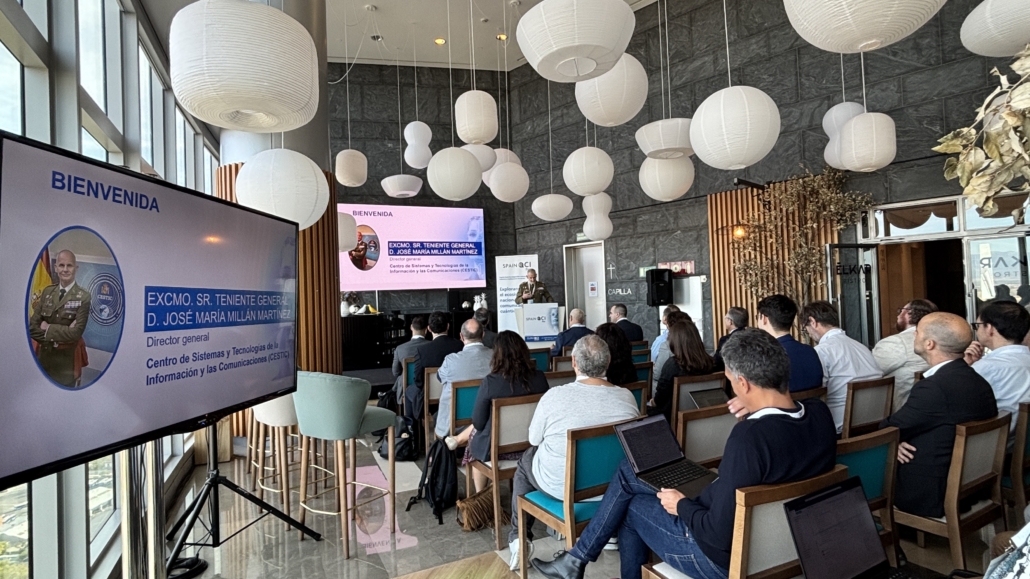
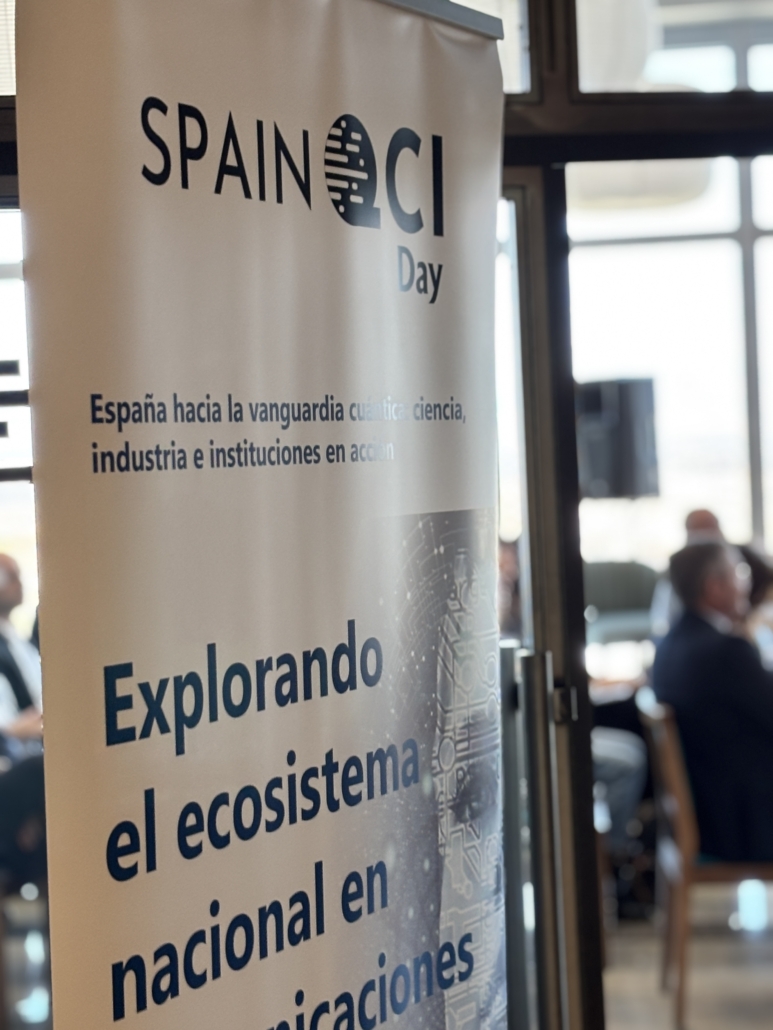
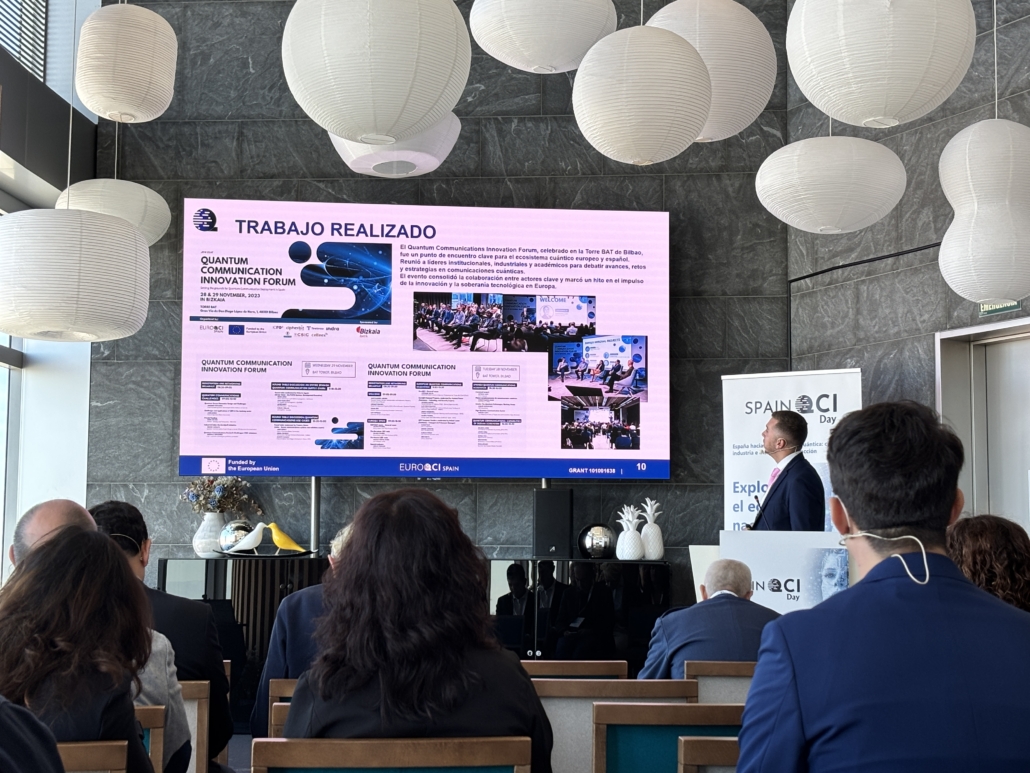
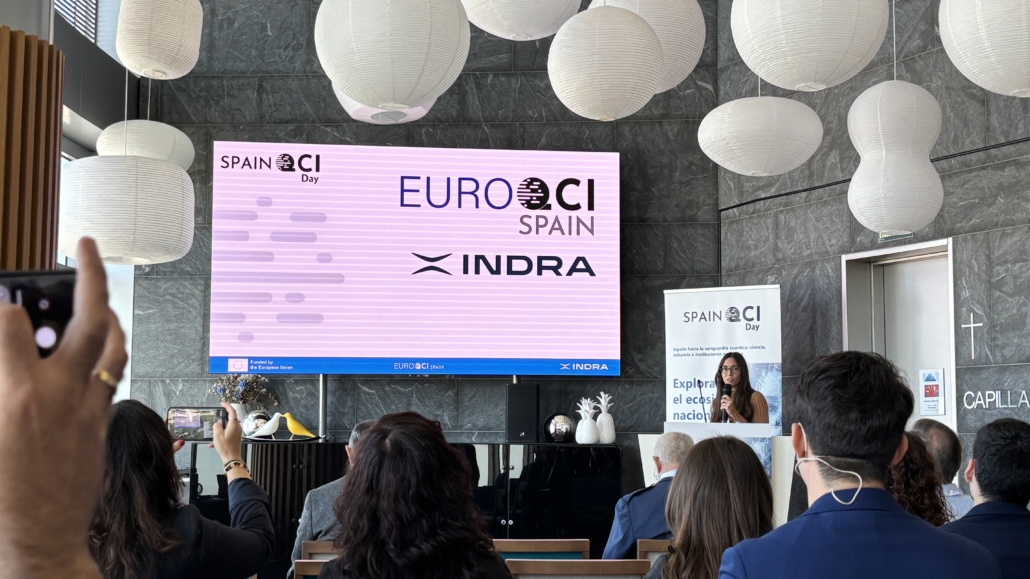
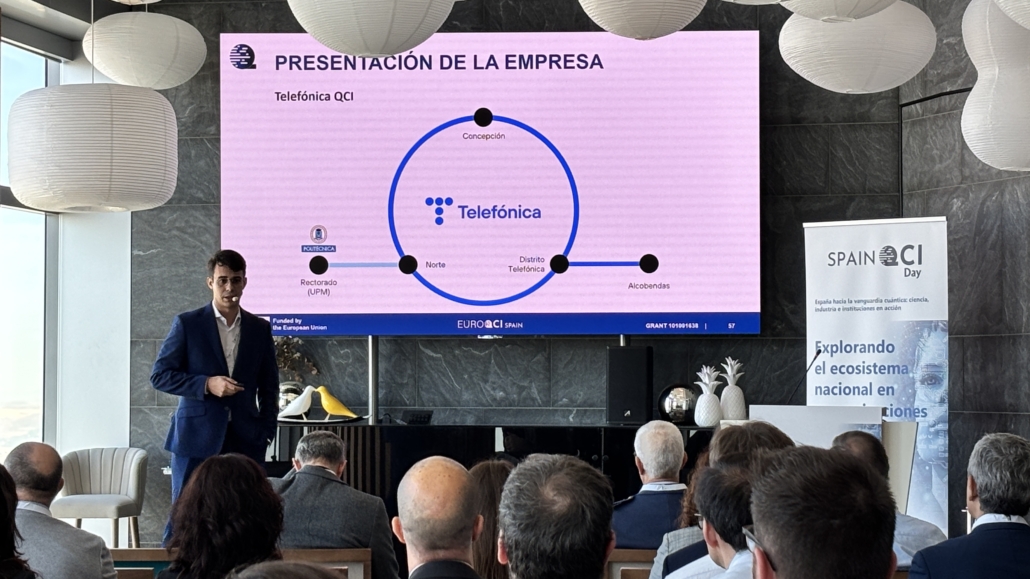
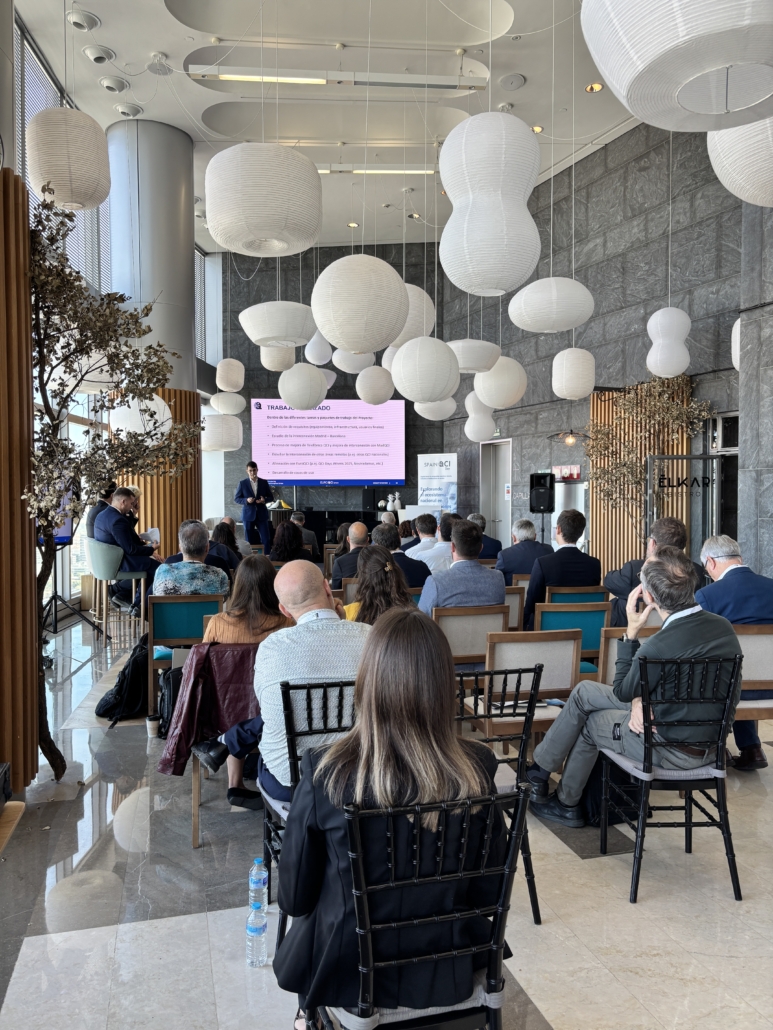
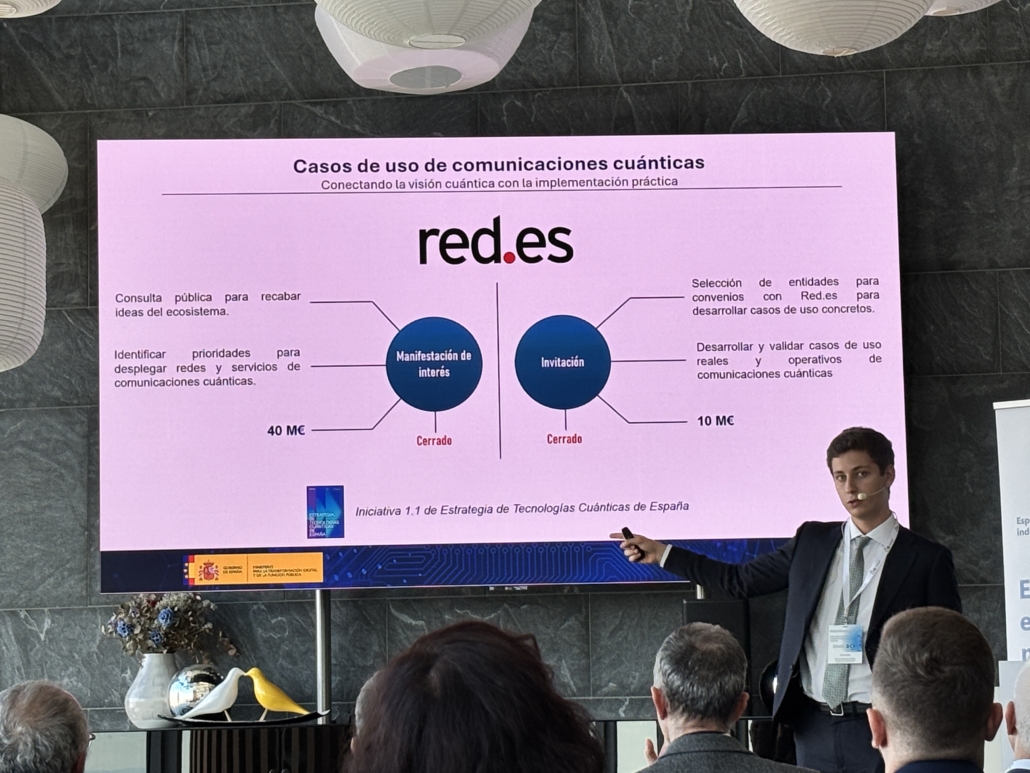
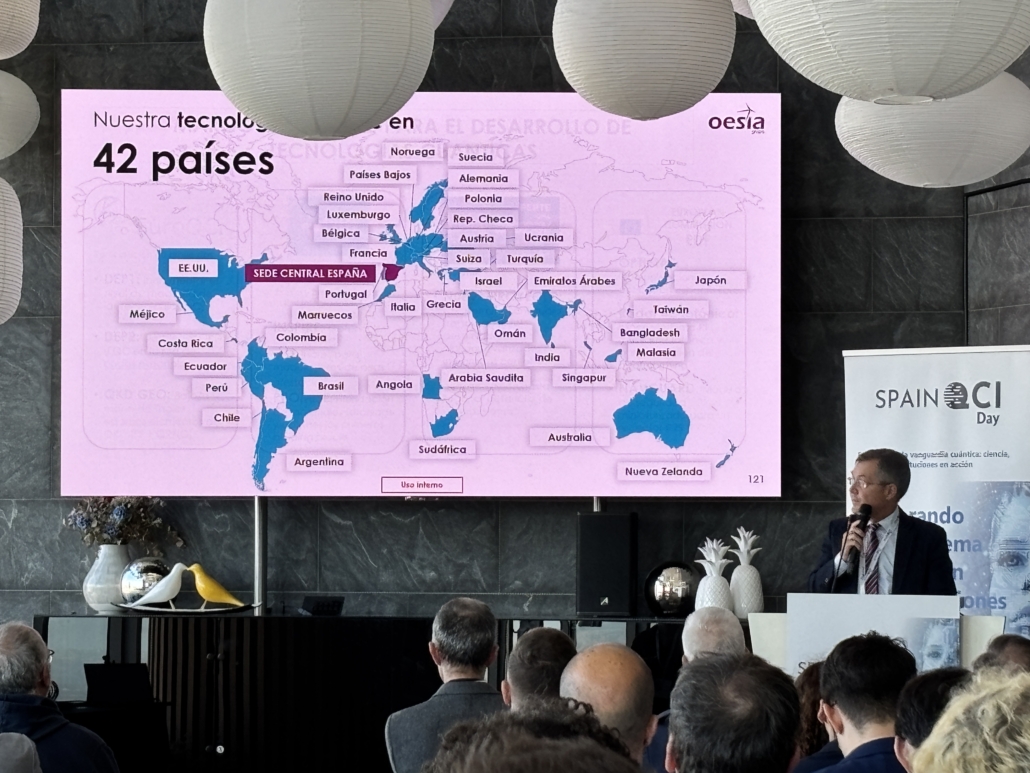
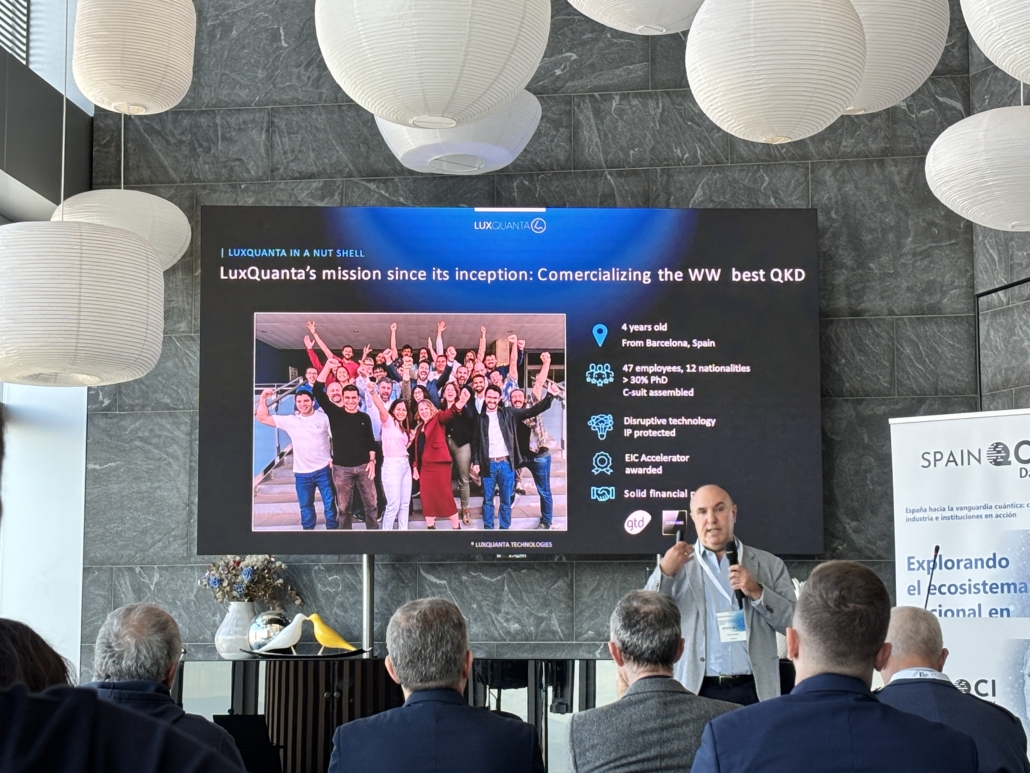
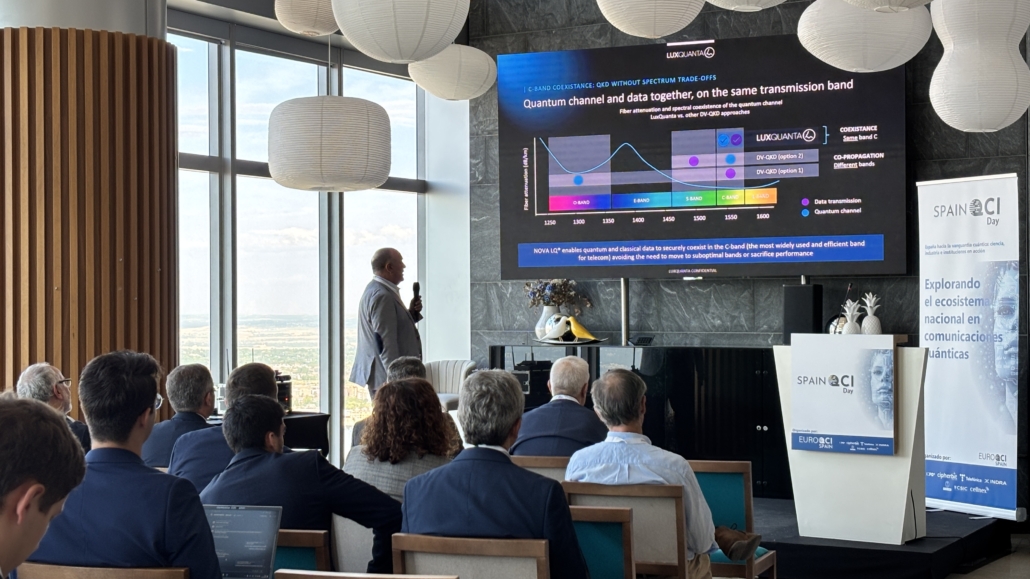
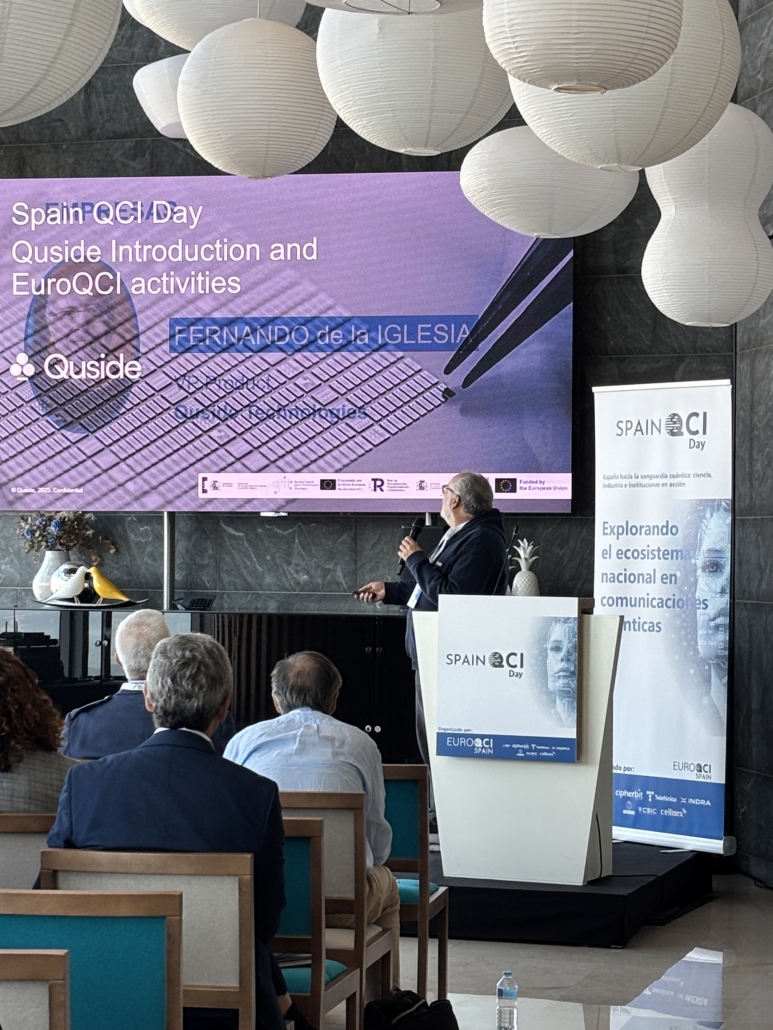
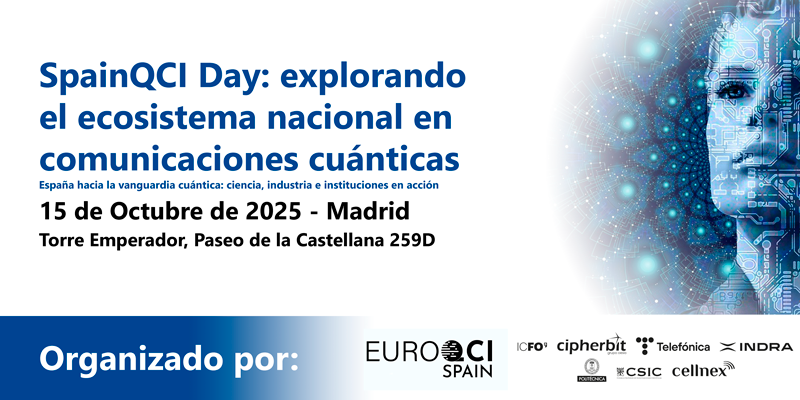
On October 15th, 2025, the SpainQCI Day 2025 conference, held at Torre Emperador in Madrid, brought together top representatives from Spain’s scientific, industrial, and institutional sectors to explore the nation’s growing leadership in quantum communications. Organized by Cipherbit-Grupo Oesía, partner of the EuroQCI Spain initiative, the event served as a platform to showcase the country’s contributions to the European Quantum Communication Infrastructure (EuroQCI) and the practical integration of quantum technologies into existing communication networks.

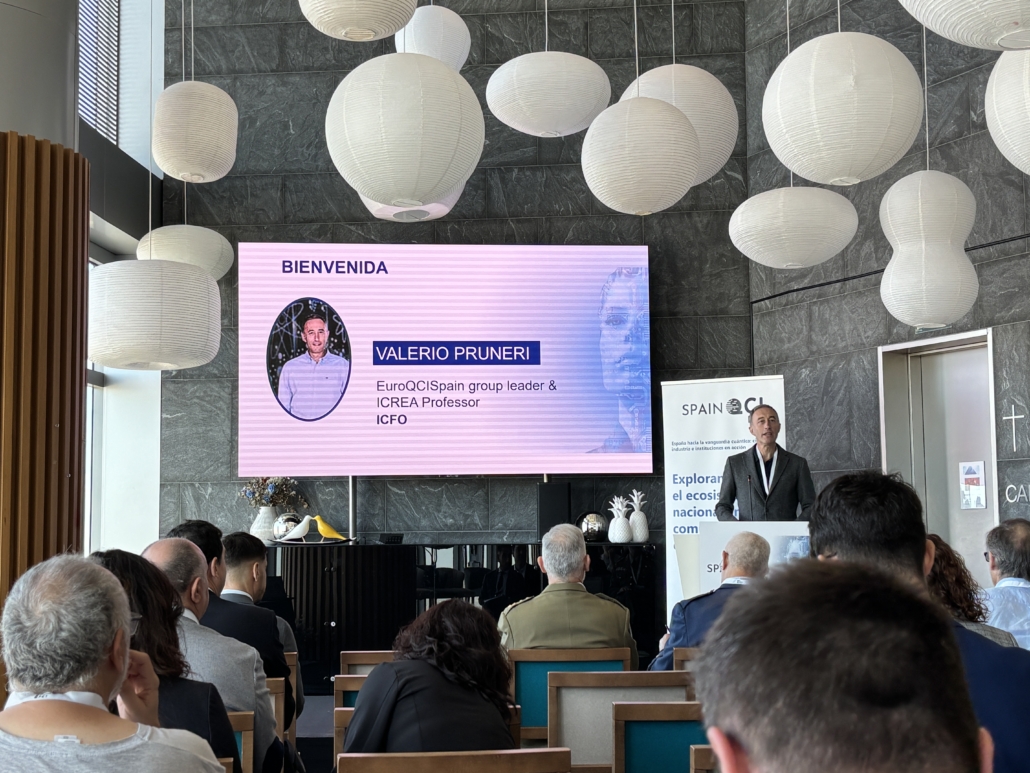
The day began with welcoming remarks from Valerio Pruneri (EuroQCISpain Coordinattor and Group Leader at ICFO), Alfredo Díez (COO, Cipherbit–Grupo Oesía), and José María Millán Martínez (Director General, CESTIC), who emphasized the strategic importance of quantum technologies for cybersecurity and national resilience. Following, early sessions addressed QCI from institutional and strategic perspectives, with speakers such as Enrique Sánchez (Quantum Flagship, EU QCN Office, Brussels) and Jaime Sánchez Mayorga (Spanish Space Agency), who outlined the European context and Spain’s pivotal role in advancing quantum-secure communications.

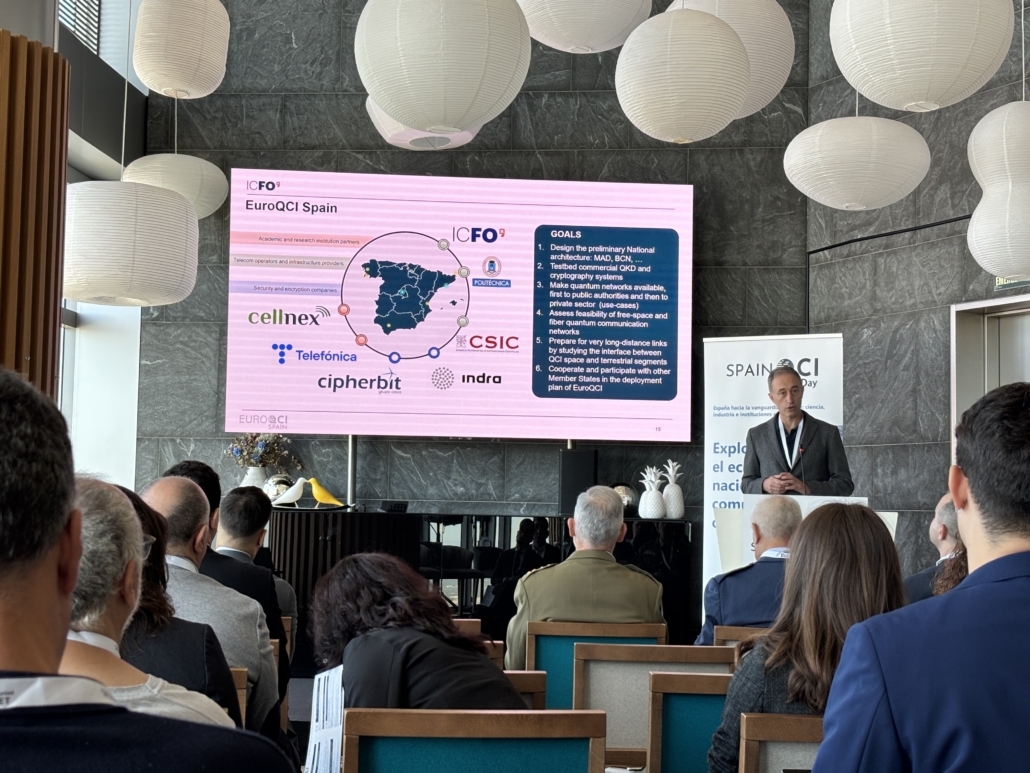
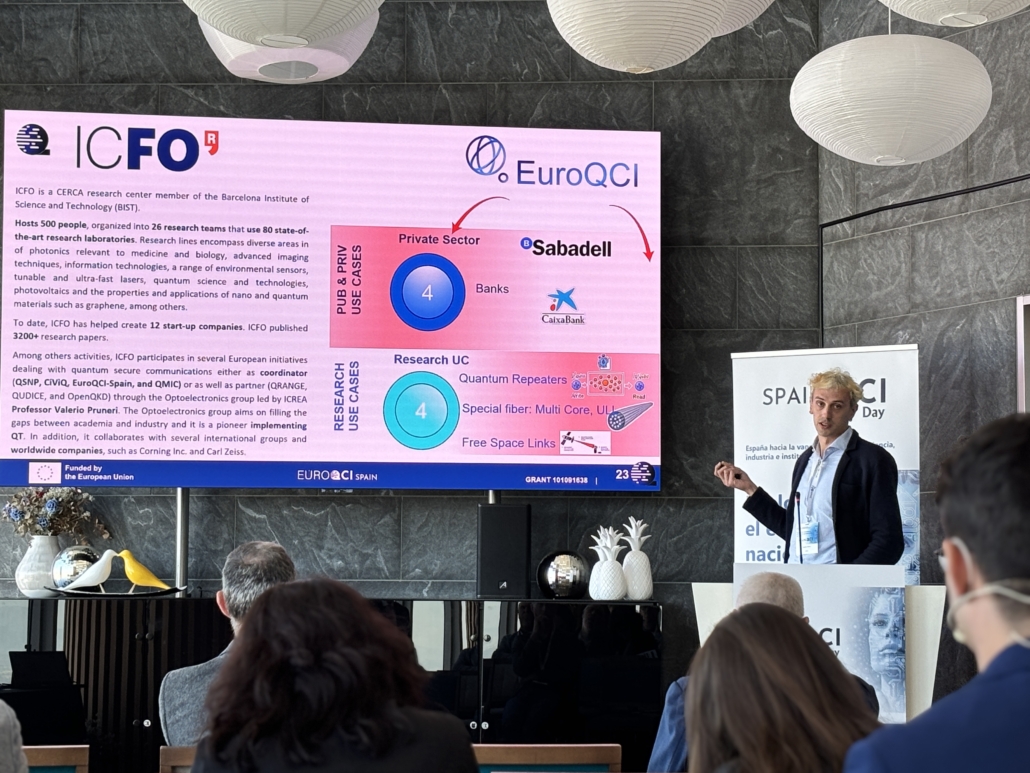
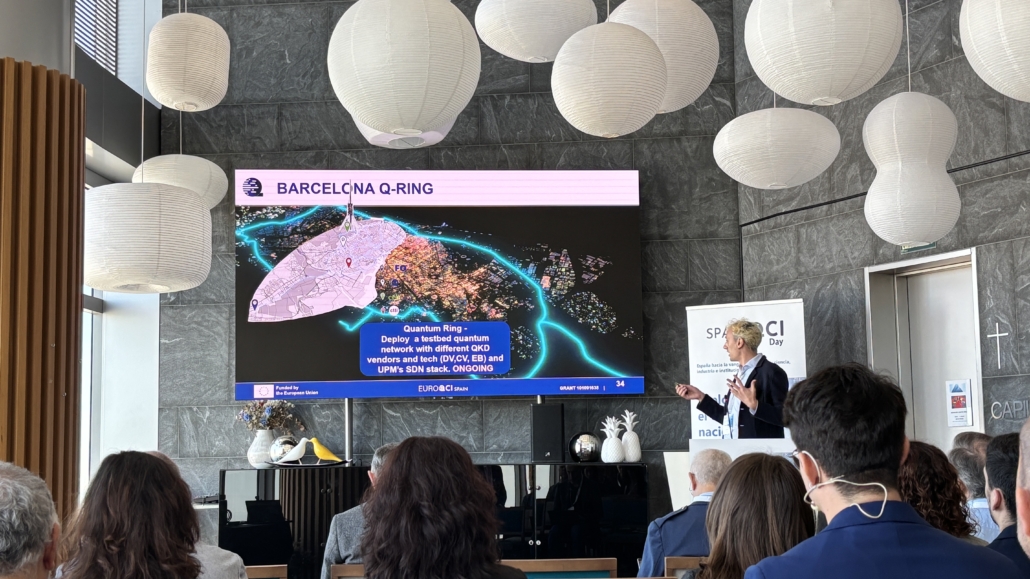
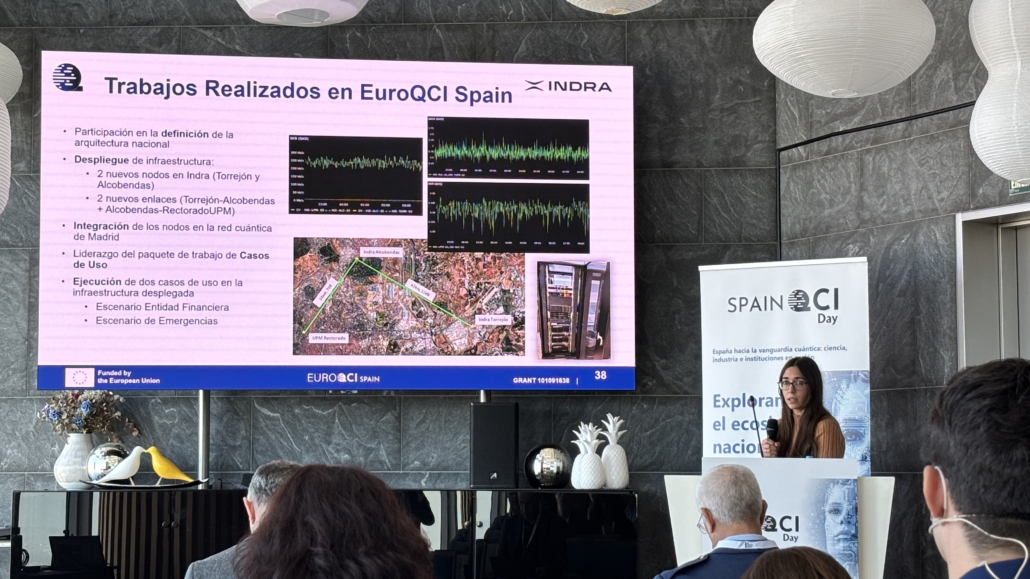
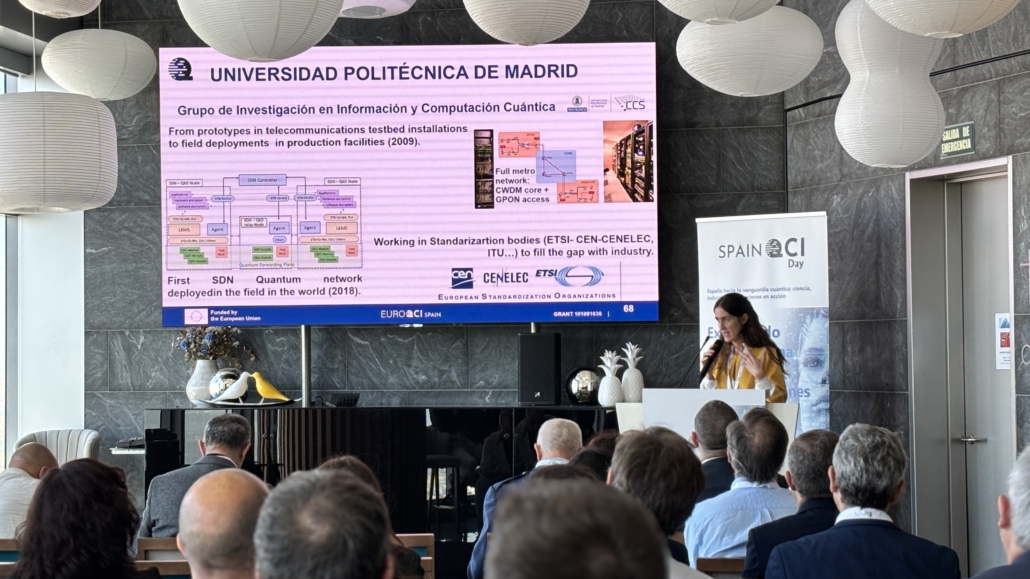
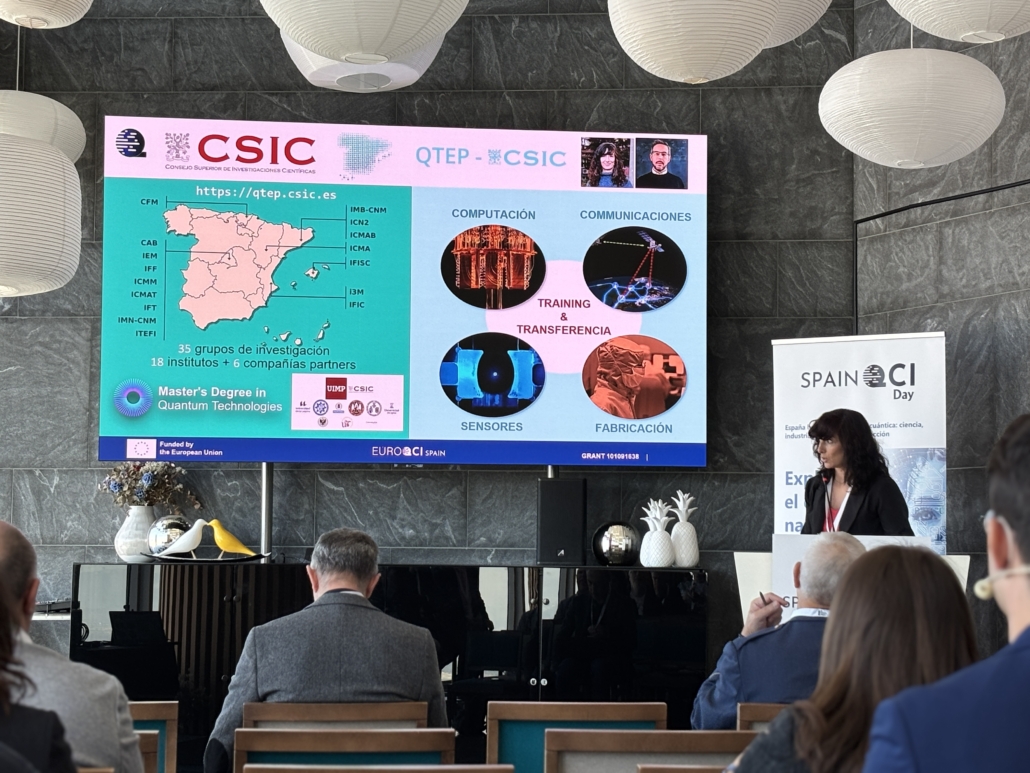
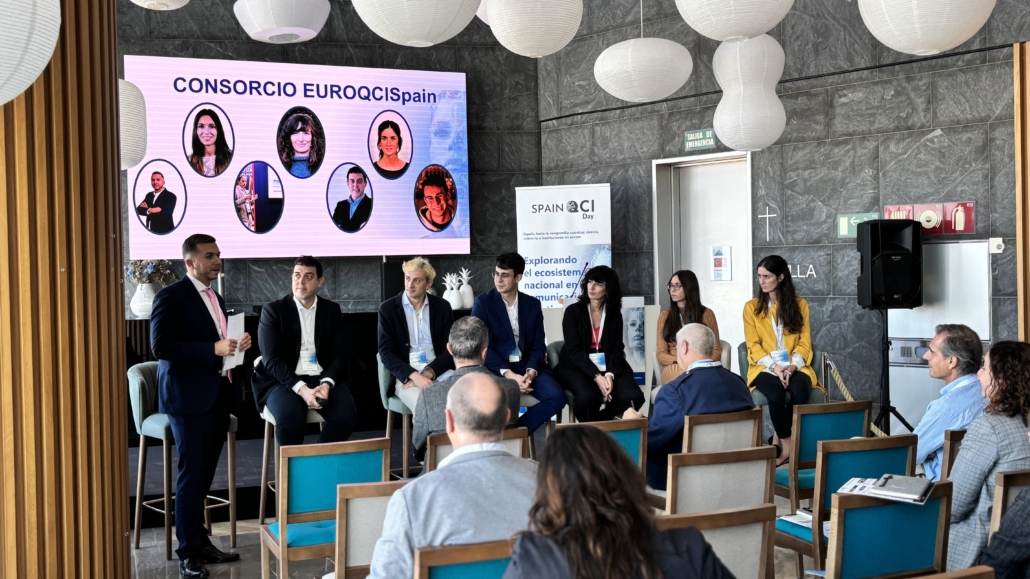
A key highlight of the conference was the presentation of the EuroQCI Spain consortium’s ongoing projects and use cases, demonstrating how quantum communication can be effectively deployed and integrated into conventional telecommunication infrastructures. The consortium, which includes ICFO, Universidad Politécnica de Madrid (UPM), Telefónica, Indra, CSIC, Cellnex and Cipherbit–Grupo Oesía, has been developing and testing different use-cases in banking, defense, governmental networks, and critical infrastructure protection. Initiatives such as BCNQCI (Barcelona Quantum Communication Infrastructure), led by ICFO, and MADQCI (Madrid Quantum Communication Infrastructure), led by UPM, have achieved significant milestones in linking urban quantum networks with classical systems, validating quantum key distribution (QKD) protocols in realistic environments. These testbeds are pioneering examples of how Spain is turning research into operational technology for secure data transmission.

Afternoon sessions examined the current positioning and future challenges major projects and hub, as well as the national and regional ecosystem, with participation from major industrial and research stakeholders.

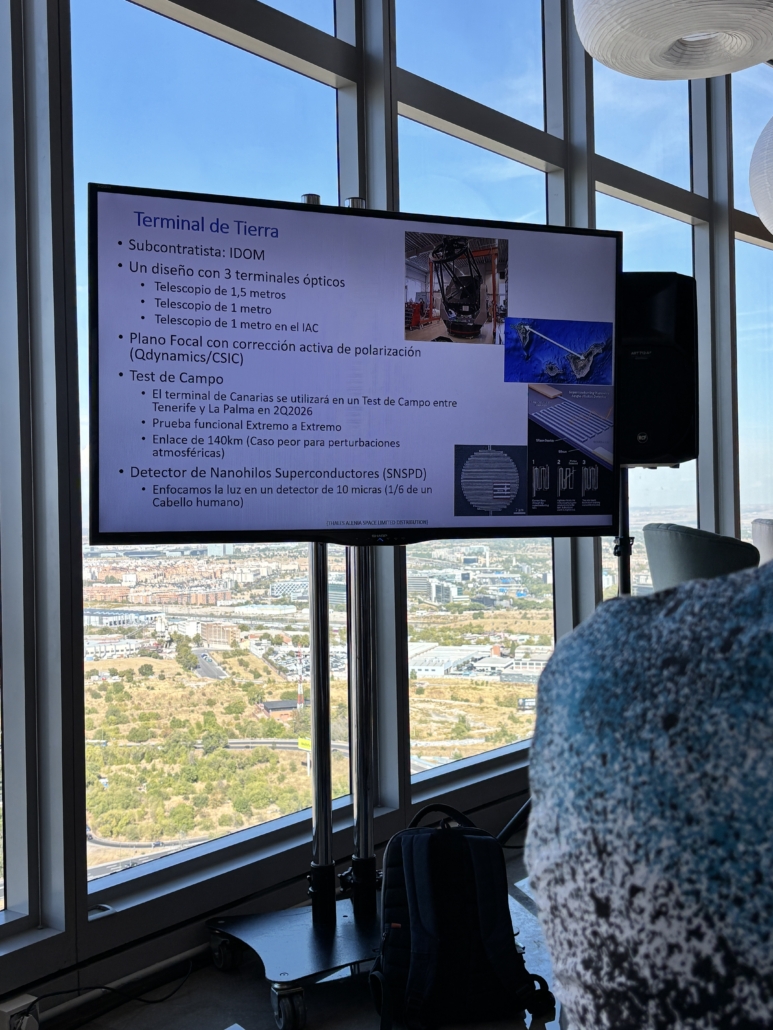
Javier Aday, Quantum Technologies Lead at the Ministry for Digital Transformation and Spain’s representative in the European Commission’s QTCG, outlined national strategies. Key national projects were presented by Ángel Álvaro (Thales Alenia Space) and Demetrio Zorita (Sener Aeroespacial), focusing on secure quantum communications and satellite-based QKD.

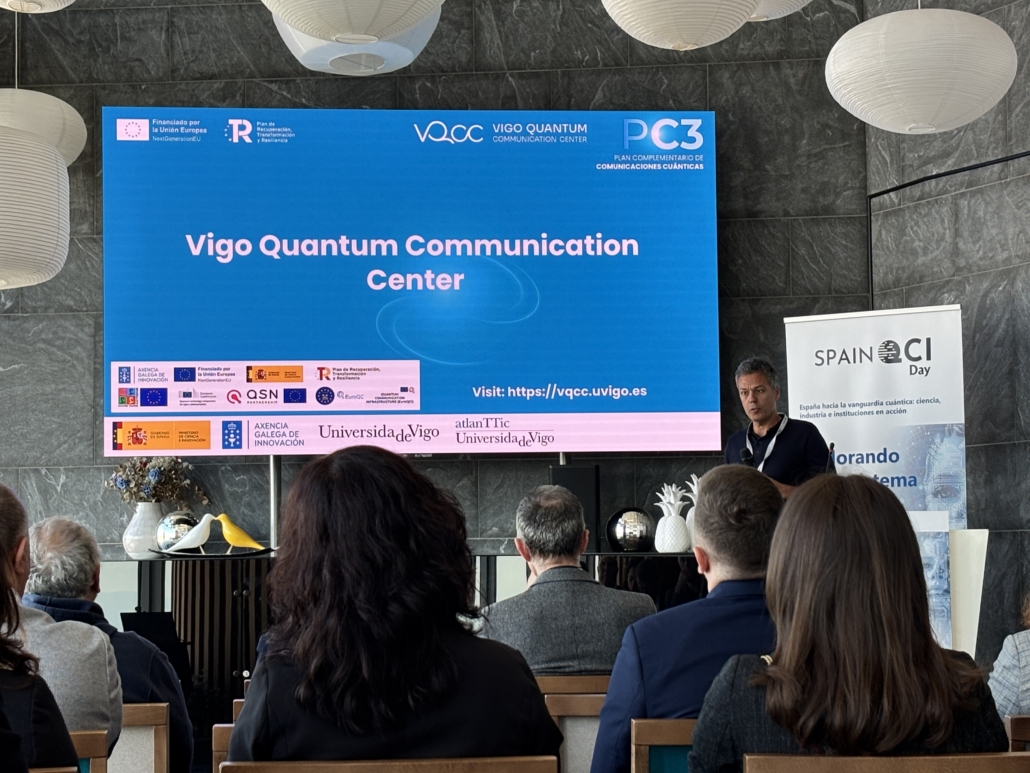
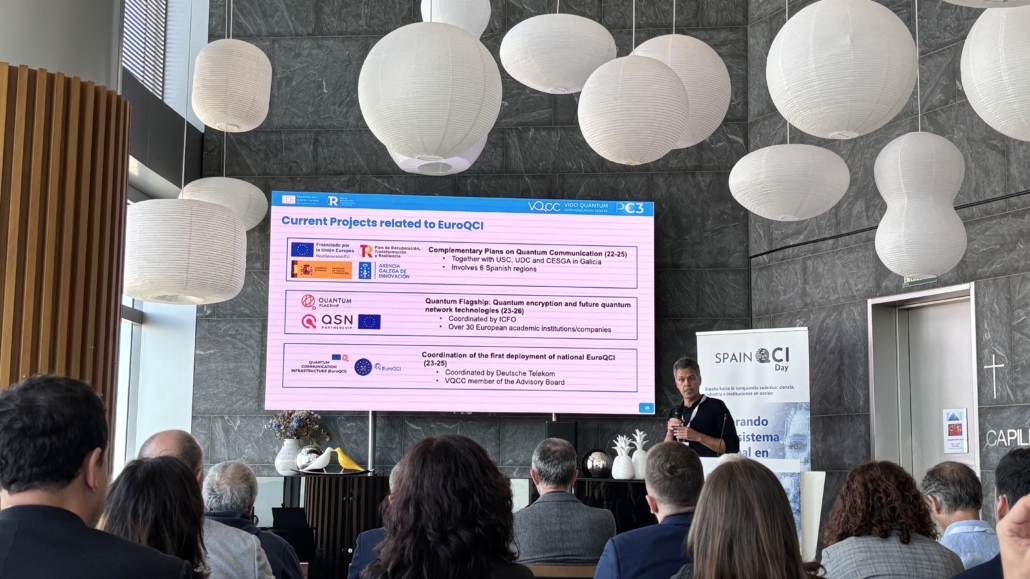
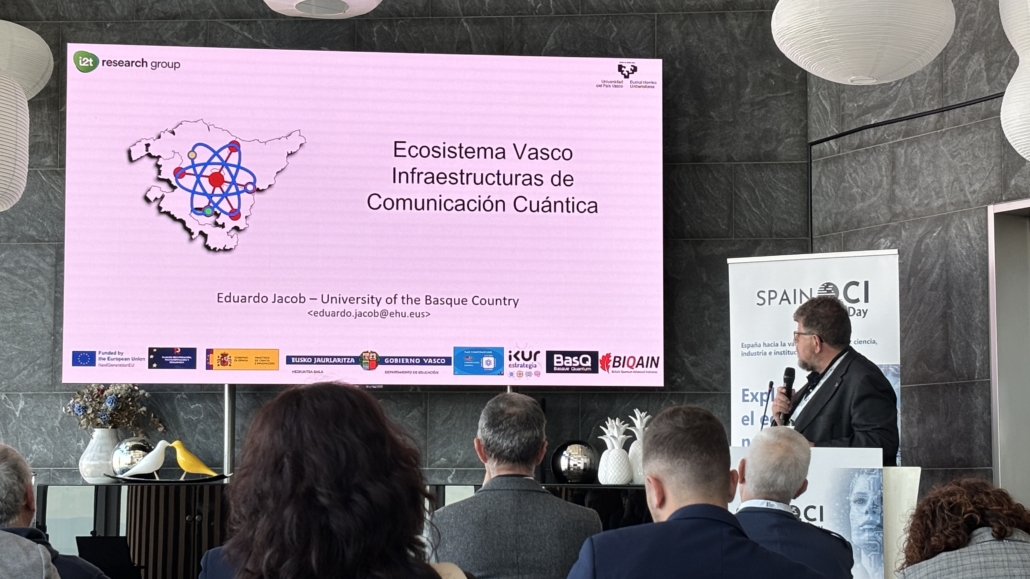
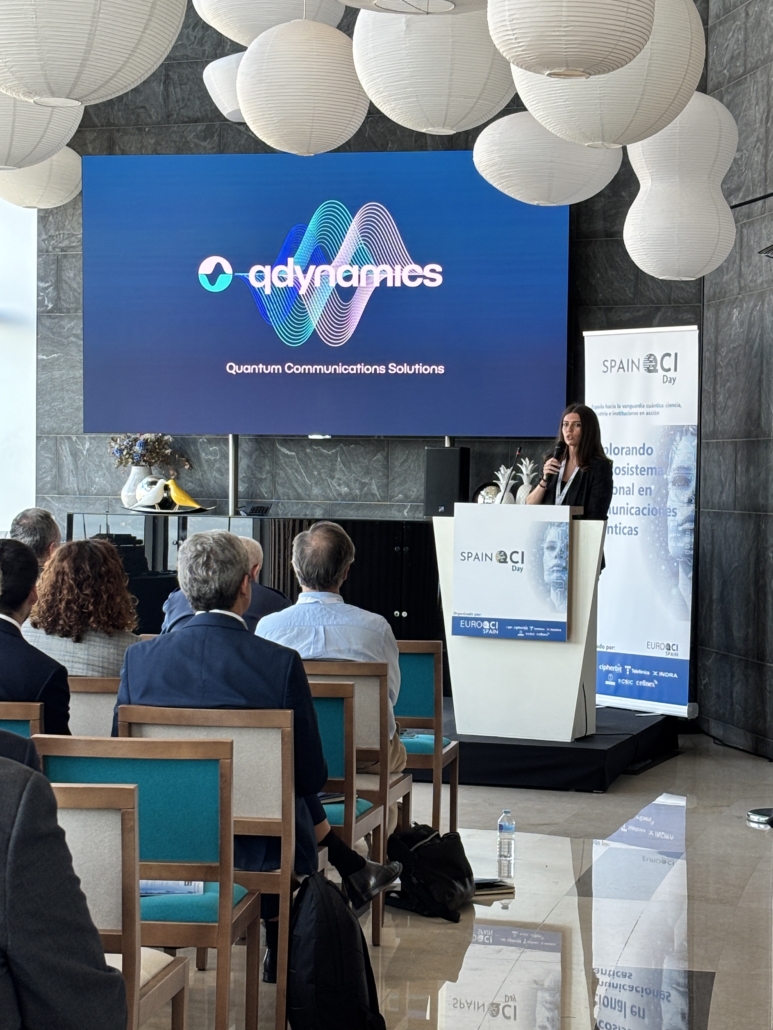
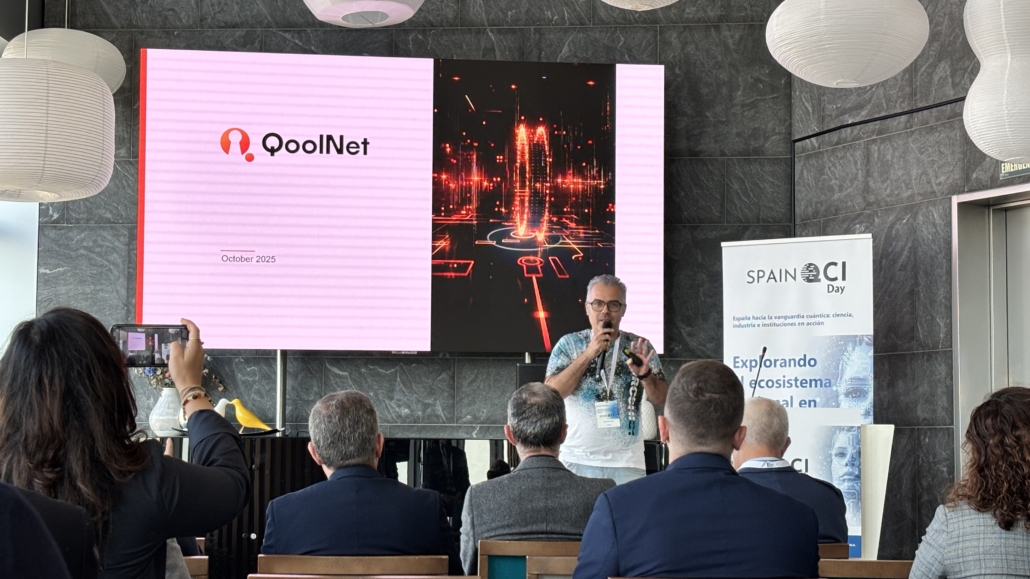
Regional innovation was highlighted by Catarina Bastos (Indra Deimos), Marcos Curty (University of Vigo), and Eduardo Jacob (EHU/UPV), emphasizing the research and quantum network development in their respective regions. Then, industry leaders—including Gonzalo Parente (Grupo Oesía), Antonio Herranz (LuxQuanta), Fernando de la Iglesia (Quside), Aida García (Q-dynamics), and Juan Pedro Brito (Qoolnet)—showcased the growing strength of Spain’s quantum technology companies and the range of products and services they have deployed in the past as well as the future. The discussions emphasized the importance of interoperability, standardization, and collaboration across sectors to strengthen Spain’s contribution to the European quantum infrastructure.

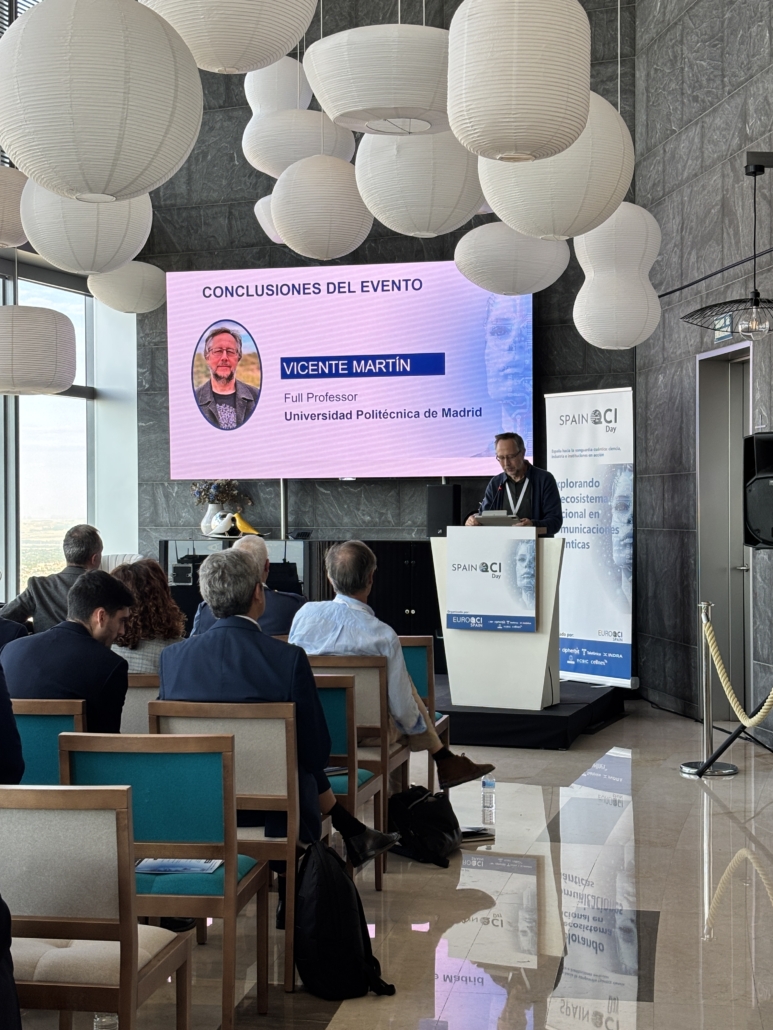
Closing the event, Vicente Martín, Professor at the Universidad Politécnica de Madrid, summarized the day’s outcomes, underlining the strong coordination between Spanish institutions and the rapid progress being made in deploying secure, scalable quantum communication networks. He highlighted the country’s ambition to become a European leader in quantum technologies through sustained research, innovation, and cross-sector collaboration.

Madrid, October 15, 2025 — The SpainQCI Day will bring together leading experts from science, industry, and public institutions at Torre Emperador in Madrid to explore the national ecosystem for quantum communications. Organized by EuroQCI Spain, the event will highlight Spain’s growing leadership in the field and its commitment to developing secure quantum networks and technological sovereignty.

Participants from organizations such as ICFO, Telefónica, Indra, and CSIC will present the latest research, industrial applications, and opportunities for collaboration within the European Quantum Communication Infrastructure initiative. The gathering will showcase Spain’s role at the forefront of innovation and security in the new era of quantum technologies.

ETSI and the Institute for Quantum Computing have organized the 2025 edition of their joint event, the ETSI/IQC Quantum Safe Cryptography Conference. This year, the event was hosted physically by the Universidad Politécnica de Madrid (UPM), partner of EuroQCI Spain, from 3–5 June 2025 in Madrid (Spain).

Cybersecurity and secure networks


We increasingly relied on cyber technologies, and hence were ever more vulnerable to cyber-attacks. As progress toward a cryptographically relevant quantum computer advanced, these attack vectors grew, and the imperative to prepare for a transition to quantum secure technologies continued to increase.
This was a continually evolving and complex journey, and much remained to be understood and navigated.

About the Conference


Designed for members of the business, industry, government, and research communities with a stake in cryptographic standardization, this conference facilitated the knowledge exchange and collaboration to enable the sharing of cyber infrastructures and business practices. to make them safe and resilient in an era with quantum computers. It showcased both the most recent developments from industry and government and cutting-edge potential solutions coming out of the most recent research.

This conference was a perfect opportunity to determine your next steps, learn from experts, and network with others going through the process. Nowhere else could you encounter the latest research in such an actionable way, with specific tracks for both executives and technical experts.

It was also an honor for us to welcome Dr. Yoslan Nur, Head of Innovation and Emerging Technologies Programs at UNESCO, and Ms. Jing Zhao, Project Director of the International Year of Quantum Science and Technology 2025 (IYQ 2025).
Their presence reinforced the global dimension of the transition toward quantum cybersecurity and the relevance of our shared mission at the intersection of science, innovation, and sustainable development.

https://www.etsi.org/events/2450-etsi-iqc-quantum-safe-cryptography-conference-2025#pane-1

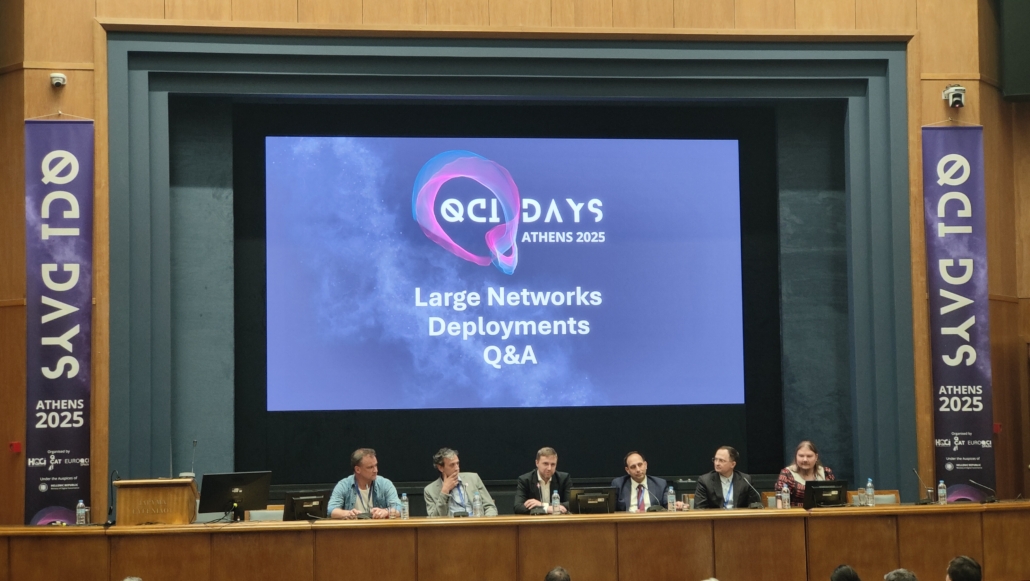
The historic city of Athens became the focal point of European quantum innovation as it hosted one of the most significant gatherings in quantum-secure communication from April 28 to 30, 2025. The high-profile event brought together leaders from across the continent at the Eugenides Foundation to mark a pivotal moment in the development of the pan-European Quantum Communication Infrastructure (EuroQCI).

The event was jointly organized by the National Quantum Communication Infrastructures (NatQCIs) of Greece (HellasQCI), Spain (EuroQCI Spain), and Austria (QCI-CAT). It was held under the auspices of the Hellenic Ministry of Digital Governance, with the support of the General Secretariat of Telecommunications and Post, and coordinated by GRNET – National Infrastructures for Research and Technology, AIT Austrian Institute of Technology, and UPM – The Technical University of Madrid.

As the successor to QKD Days Madrid 2022 and QCI Days Vienna 2024, the Athens event attracted a diverse and influential audience, including representatives from the public and private sectors, the Digital Europe Programme (DEP), Quantum Flagship projects, research institutions, industry leaders, and policy makers.

oplus_2

The EuroQCI Spain initiative was prominently featured at the quantum communication conference, where key representatives from the project shared insights into Spain’s growing quantum network infrastructure.

As part of the first session of the conference, Vicente Martin, Professor from the UPM, participated in a high-level panel alongside several keynote speakers, contributing to broader discussions on strategic quantum initiatives. He reflected on EuroQCI Spain’s engagement at the forefront of European quantum dialogue.

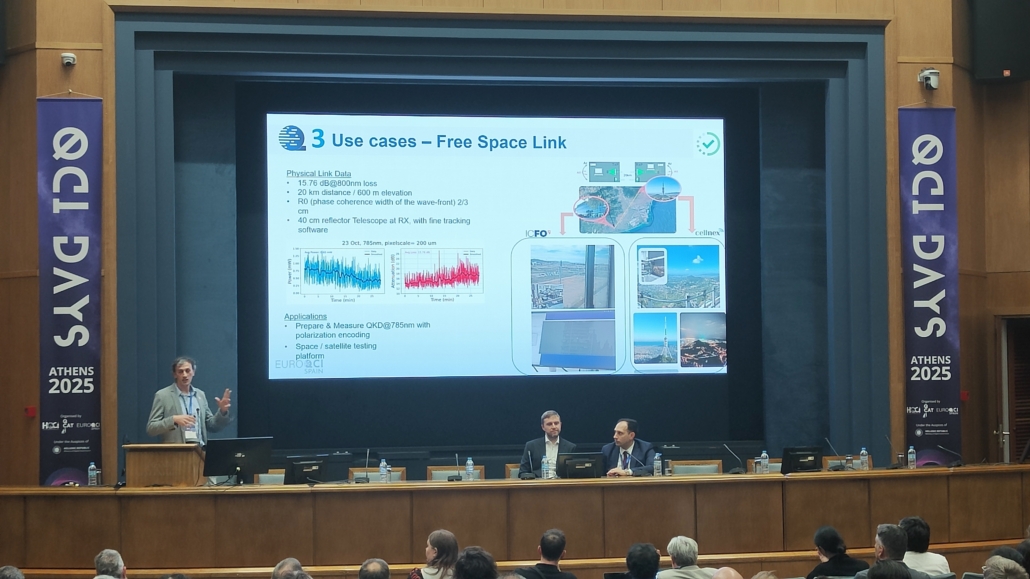
During the session dedicated to “Large Network Deployments,” Andrea Gorni, researcher at ICFO,  delivered a presentation on behalf of EuroQCI Spain, highlighting the progress and development of the quantum communication networks in Madrid and Barcelona. The talk underscored Spain’s active role in building the future of secure quantum connectivity in Europe.

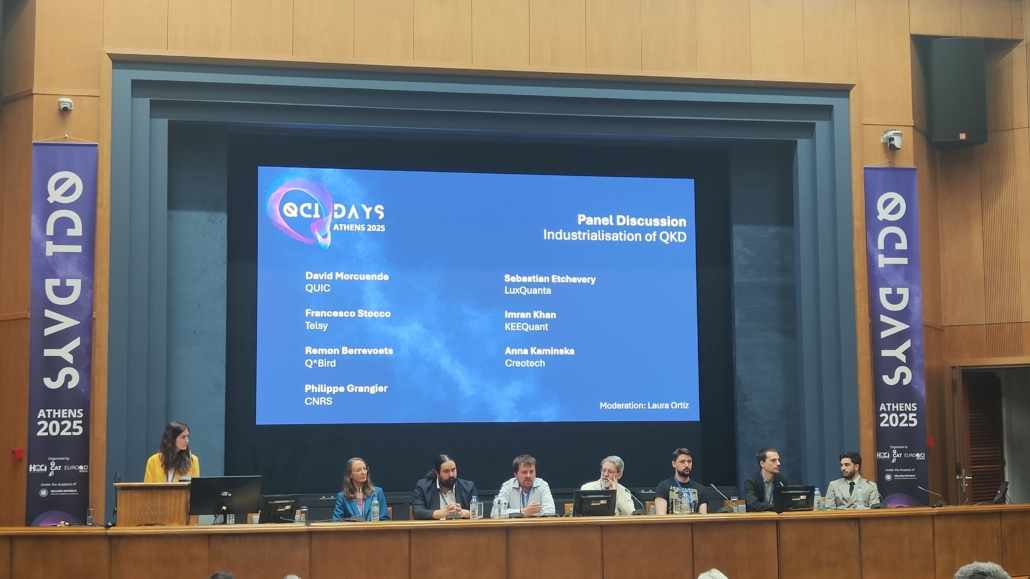
Additionally, Laura Ortiz, researcher from UPM, also moderated a panel discussion, although the specific topic is to be confirmed upon reviewing the full conference program.

Finally, Verónica Fernandez and Aida García, researchers from CSIC, showcased their work and had the opportunity to present their project during a company pitch session and represent it at an exhibition booth throughout the event, attracting interest from both technical and industry audiences.

The participation of the EuroQCI Spain team in multiple formats — talks, panels, pitches, and exhibitions — highlighted the collaborative and multi-faceted nature of Spain’s contribution to the European quantum ecosystem. The event also set the stage for the next steps in building a secure and sovereign quantum communication infrastructure for Europe.

Beyond its scientific and strategic importance, the event offered participants a unique opportunity to connect in the vibrant and welcoming setting of Athens. Guests enjoyed a rich blend of cultural and culinary experiences while forging new collaborations and exploring emerging trends in the quantum industry.

The Athens gathering marked a major milestone in Europe’s quantum journey — a successful convergence of minds dedicated to securing the continent’s digital future through cutting-edge quantum technology.

Links: https://qci-days.eu/

The National Quantum Communication Infrastructures (NatQCIs) projects of Greece (HellasQCI), Spain (EuroQCI Spain), Austria (QCI-CAT) respectively are hosting a captivating event that will take place in Athens, the historical capital of Europe.

The event will be held under the auspices of the Hellenic Ministry of Digital Governance, with the support of the General Secretariat of Telecommunications and Post, and is organised by GRNET – National Infrastructures for Research and Technology (HellasQCI coordinator), AIT Austrian Institute of Technology (QCI-CAT coordinator) and UPM – The Technical University of Madrid (EuroQCI Spain).

Being the successor of QKD Days Madrid in 2022 and QCI Days Vienna 2024, this event promises a unique opportunity to discuss the newest trends in quantum-secure communication. The occasion brings together the EuroQCI communities from public and private sectors, experts from Digital Europe Programme (DEP) and Quantum Flagship projects, specialists from industry and R&D, and policy makers in the fields of quantum communication and cybersecurity. The aim is to shape the future of EuroQCI, the pan-European Quantum Communication Infrastructure.
This event will provide a valuable opportunity, as the first phase of the EuroQCI approaches completion. Concrete results, use cases and future plans for the next steps in the EuroQCI will be presented.
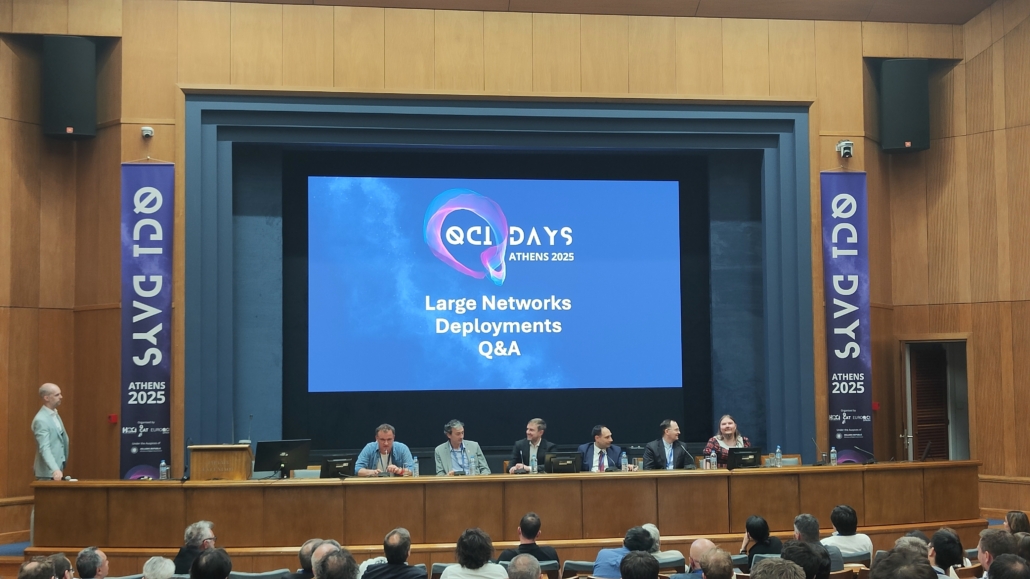
The event will run from 28 – 30 April 2025  at the Eugenides Foundation, 387, Syggrou Ave., 17564, P. Faliro, Greece

EuroQCI Spain representatives Vicente Martin, Andrea Gorni and Laura Ortiz have been invited to present talks and show a demo on how the hardware and software work and how the systems are being deployed.

  • In celebration of the International Year of Quantum Science and Technologies (IYQ), the European Quantum Flagship returns to the Mobile World Congress (MWC25) with “Quantum Europe” (Hall 6 Stand 6A8), a stand aimed at showcasing the most recent disruptive advances in quantum technologies in the areas of connectivity, cybersecurity, computing, AI and telecommunications, among others.
  • The worldwide congress, held from March 3-6 in Barcelona, will be once more an outstanding opportunity for the European Quantum Flagship and other EU and local quantum initiatives to show some of their most mature technology and cutting- edge innovations, connect with the global audience, and show the current status of integration of this technology within the current market as well as seek for potential new users.

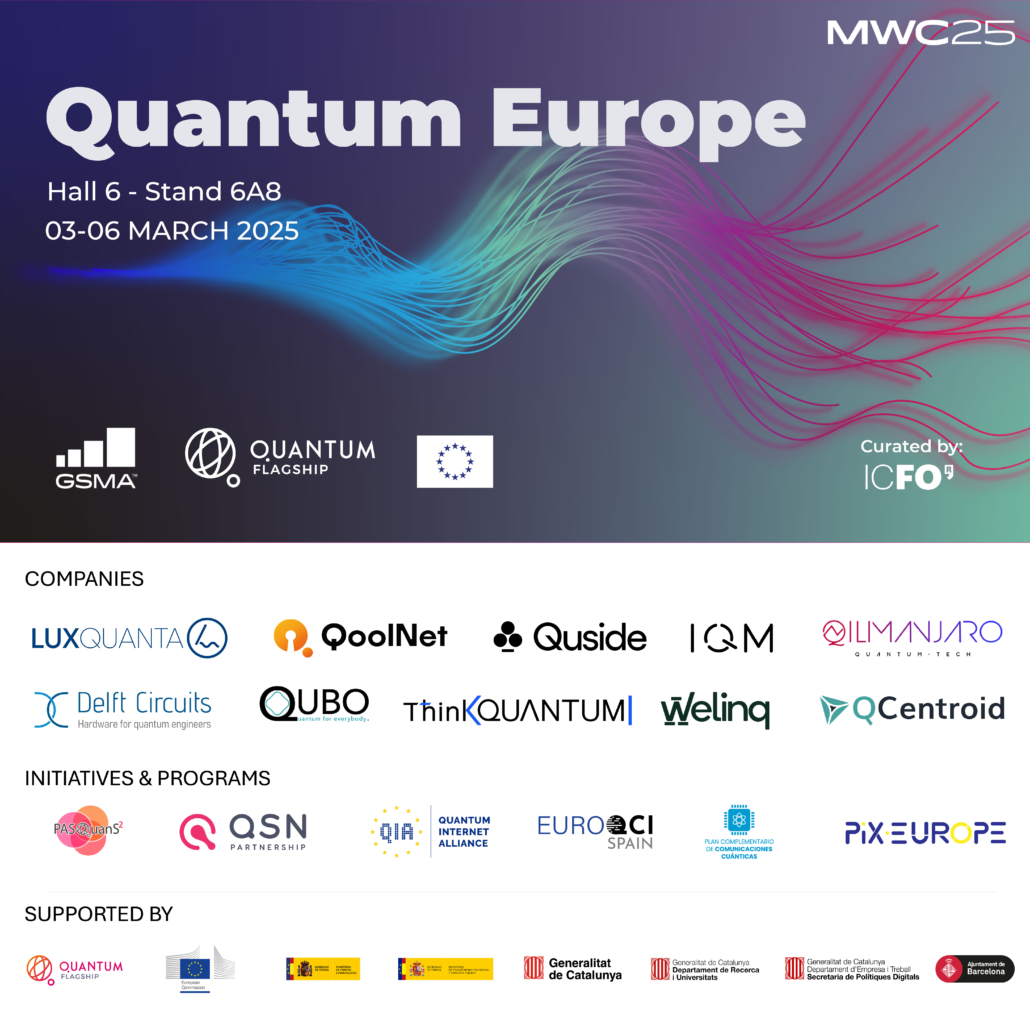
Barcelona, February 24, 2025:  This year, MWC25 will host the Quantum Europe stand. Curated by ICFO and located in Hall 6 – Stand 6A8, the stand will feature the latest achievements and advances accomplished so far by some of the companies and initiatives that comprise the Quantum Flagship. Quantum devices and technologies that cover areas such as quantum-encrypted ultra-safe communications on ground and in space, the future quantum internet, quantum simulation and computing, will be showcased by the different entities at the stand to provide an overview of the current status of maturity of these technologies to the MWC audience that is interested in cybersecurity, telecommunications, artificial intelligence, connectivity, finance, healthcare, reliability and agility in secure communications, among others.

Arranged in an area of 100m2, the space holds different areas:  

  1. The Quantum Flagship stand: honoring the International Year of Quantum Science and Technology 2025, the flagship will provide an overall view of the initiative, the international context and Europe’s position, its current initiatives, as well as highlight the importance of these technologies and their future impact on society.
  2. Companies: in quantum communications, the companies LuxQuanta;Qoolnet;QUBO; Quside; Welinq andThinkQuantum, will share the latest technology advances in quantum communications: Quantum Random Number Generator (QRNGs) devices, QKD devices, quantum cryptography systems, key management software, quantum memories and repeaters, among others. In quantum computing, IQM Qilimanjaro, Qcentroid, and Delft Circuits will be present providing software and hardware solution for quantum computing and simulation, additionally providing a real example of a quantum computer mock-up on the exhibitor floor.  
  3. Exhibition of devices and technology: A full set of quantum computer chips, microchips, photonic chips, quantum communication racks and quantum computer mock-ups will be on display in an entire exhibition area for the audience to grasp the idea of what quantum technologies are, how they can be integrated in current technologies and how they can provide a significant jump or even become a game changer in technology development.
  4. Product releases: the companies LuxQuanta and Quside will make product announcements. LuxQuanta will announce the release of a new product for quantum communications and cybersecurity, in accordance to the latest news published recently regarding the viability of Quantum-Safe security of communications between healthcare centers in Madrid, together with the operator Telefónica. Quside will announce the release of new products as well, linked to their core Quantum Random Number Generators (QRNGs) technology. The announcements will be carried out on Wednesday starting at 11am in the Quantum Europe stand (Hall 6 – Stand 6A8).  
  5. European Initiatives: several initiatives will be present at the Quantum Europe stand: the Quantum Internet Alliance (QIA) -quantum internet-; Quantum Secure Network Partnership (QSNP) – Quantum Key Distribution technology-; the Programmable atomic Large-Scale Quantum Simulation 2.1 (Pasquans) – quantum simulation -; EuroQCI-Spain focused on the deployment of QKD technology in telecommunication networks; the pilot line in photonic chips PIXEurope and the Plan Complementario de Comunicaciones Cuánticas, among others.
  6. Quantum talks: the stand will once again host a stage where exhibitors will present the latest advances in quantum technologies to underline the leading position of Europe in this area. This year quantum talks willtake place at 11:00h and at 15:00h. The program agenda may be found attached below.

The Quantum Europe stand at MWC25 is just a small sample of the technology that is being developed within the Flagship, but a clear indicator of how Europe is seeking to drive quantum technologies into the market and industry and position itself as a leader in this field. With the launch of the International Year of Quantum Science and Technology 2025, recognized by UNESCO, the world is increasingly aware of the importance of these technologies and is exploring new ways to push boundaries—developing innovations that can revolutionize communication, information processing, and human interaction while enhancing daily life, all with a focus on sustainability for both society and the planet.

About Quantum Technologies in Europe

The Quantum Flagship is a 10-year initiative funded by the European Commission that was launched in October 2018 to accelerate the development of quantum technologies and their transition to the market. The Flagship is currently in its second phase, coordinating 7 large Framework Agreements (FPA) in Quantum Communications, Simulation, Computing, Testing and Pilot programs, comprising many leading academic and industrial partners from across Europe to collaborate on the future of quantum technology.

The goal is to consolidate and expand European scientific leadership and excellence in this research area, to make Europe a dynamic and attractive region for innovative research, business and investments in this field. More recently, Quantum Technologies have expanded to other European actions, e.g. within the Digital Europe Program (DEP), the European Innovation Council (EIC), and the forthcoming Chips Act. Quantum technologies are also supported by actions at the national levels, under the form of various National Quantum Initiatives.

Funding

The Quantum Europe space has been partially funded by the European Quantum Flagship of the European Commission, GSMA, and the Generalitat de Catalunya, through the Secretary of Digital Policies and the Department of Research and Universities, and all participating companies. 

Links

Link to the MWC 25 Europe Quantum Space

The president of the Generalitat de Catalunya, Salvador Illa, accompanied by the minister of research and universities, Núria Montserrat, presided an event to inaugurate the year in Catalonia

February 26, 2025

On February 21st, 2025, within the framework of the International Year of Quantum Science and Technology (IYQ 2025), the Department of Research and Universities of the Generalitat de Catalunya organized an event dedicated to exploring the past, present and future of quantum technologies and their impact in society. The event aimed to promote collaboration between research, industry and society by showcasing the academic and industrial advancements that have been made so far in the field both in Catalonia and in Spain, visualizing the different initiatives that are being deployed in the region as well as the start-ups and spin-offs that have emerged in the recent years and now run at full speed to bring quantum technologies to market.

The event, moderated by the quantum physicist and science communicator Sónia Fernandez Vidal, began with opening words from the President of the Generalitat de Catalunya, Salvador Ila, who highlighted the importance of quantum science and technologies (QST) and the impact they will have in the economic growth and future of our society. Underscoring the Generalitat’s commitment to QSTs for the future of Catalonia, he painted a picture of the international context and Europe’s leadership position in the field.

Following this, the Minister of Research and Universities of the Generalitat de Catalunya, Núria Montserrat, also emphasized the importance that these technologies are having in transforming our society in areas ranging from computing and communications, to information security and the discovery of new materials, just to mention a few. “Catalunya, with its state-of-the-art research and industry ecosystem, is well positioned to become a key player in this field and today we have a chance to listen to the entities that comprise this ecosystem, to foster a space where we can learn and exchange ideas, as well as establish future synergies” she concluded.

Keynote talks were given by the quantum expert Ignacio Cirac, Director at the Max Planck Institute of Quantum Optics in Germany and President of ICFO’s Scientific Advisory Board, and Gustav Kalbe, Director of Communication Networks, Content and Technology – Digital Excellence and Scientific Infrastructure of the European Commission. While the former gave an overview of what quantum technologies are and how they can be applied in everyday life scenarios, the latter gave insights on the European Commission’s view and role in quantum technology policymaking and how it is investing to position Europe at the front line worldwide.
The event gathered experts not only in the academic and research fields, but also policymakers, spin-offs and mid and large-size companies that are becoming the early adopters of this technology. Initiatives such as QSNPEuroQCI Spain, PixEurope (led by ICFO), Quantum Spain (led by the Barcelona SuperComputing Center), Quantum Galicia (led by the University of Vigo), MADQCI (led by the Politecnic University of Madrid), BasqueQ (led by the Department of Science, Universities and Innovation of the Basque Government), Plan Complementario de Comunicaciones Cuánticas (jointly led by UPM and ICFO) provided the latest advances that are occurring both in the field of quantum communications as well as computing.

Within the industrial arena, the companies LuxQuanta, Qilimanjaro, Multiverse, Qoolnet, Qdynamics and Quside were invited to share their insights, the technology they are developing, the markets they are encountering, the perspectives they have for the future and how they can “transform this technology from what now seems to be science fiction to something that is a real tangible technology like a  toaster we have at home that works by simply pressing a button” explained Vanesa Diaz, from LuxQuanta.

Finally, Joe Niemala, IYQ Committee representative, concluded the round of presentations with a heartfelt speech on the establishment of the International Year of Quantum, highlighting its grassroots origins and the collective effort behind its inception. Following this, Lydia Sanmartí-Vila, Outreach coordinator at ICFO, provided a comprehensive overview of some of the exciting initiatives and events planned for 2025, paving the way for a transformative year in quantum science.

Quantum technologies hold the potential to revolutionize our society, from computing and communication to healthcare and security, making the seemingly impossible a reality. To harness this power, we must invest in educating and inspiring the next generation, ensuring that quantum literacy becomes as commonplace as digital literacy—transforming these groundbreaking innovations into everyday tools that shape a smarter, more connected and sustainable world.

International Year of Quantum Science and Technology (IYQ)

On June 7th, 2024 the U.N. proclaimed 2025 as the International Year of Quantum Science and Technology (IYQ). This year-long, worldwide initiative aims to celebrate the contributions of quantum science to technological progress over the past century, raise global awareness of its importance to sustainable development in the 21st century, and ensure that all nations have access to quantum education and opportunities.

On February 4th, 2025, UNESCO, and associated partners, celebrated the official opening of the International Year of Quantum Science and Technology (IYQ) in Paris to raise the collective awareness of the transformative potential of quantum science and technology to address critical global challenges.  

IYQ coincides with the 100th anniversary of the birth of modern quantum mechanics — the theory that describes the behavior of matter and energy at atomic and subatomic scales and has made possible many of the world’s most important technologies. Over the past century, quantum theory has become foundational to physics, chemistry, engineering, and biology and has revolutionized modern electronics and global telecommunications. Inventions like the transistor, lasers, rare-earth magnets, and LEDs — technologies that brought the internet, computers, solar cells, MRI, and global navigation into fruition — all exist because of quantum mechanics.